

Pigment
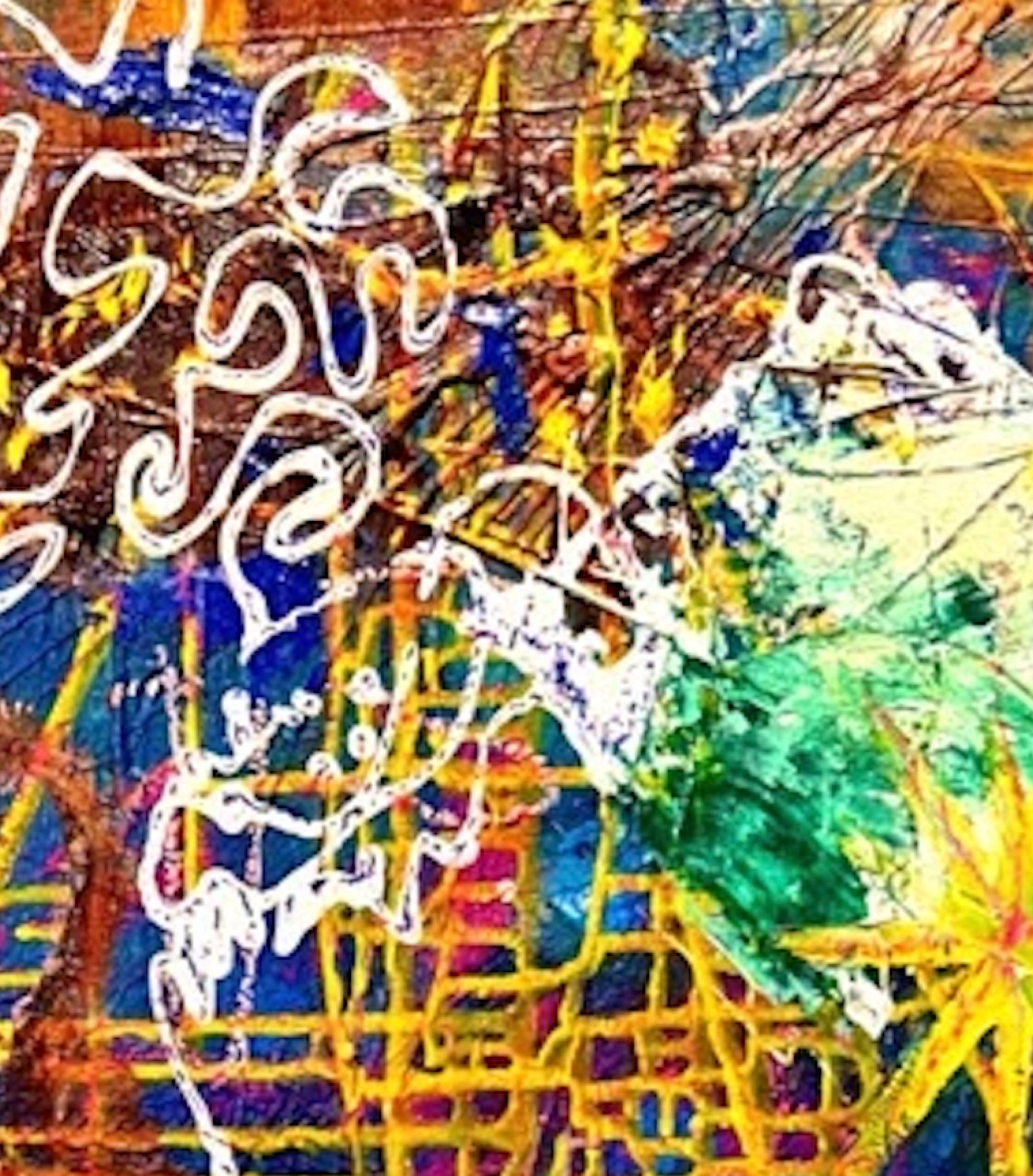
Pigment is material substance, optical carrier of colour and image-forming medium. In Marlon Nikolai’s practice it is not a decorative coating, but an active means through which visibility, contrast, relation and pictorial space are organised.
Pigment absorbs and reflects particular wavelengths of light. Its appearance therefore changes with illumination, density, ground, surface and neighbouring colours. Colour is not treated as a fixed code: it emerges in a concrete relation between material, light, composition, space and perception.
Through deliberate arrangement, lines, planes, figures, spaces, contrasts and rhythms emerge. Pigment itself is not archetypal. The pictorial form produced with it may acquire individual, cultural or archetypal significance, but that meaning remains dependent on context and on its relation to the work as a whole.
As grain, deposit, saturation or layer, pigment also retains a distinctly material presence. It can emphasise the surface or participate in optical depth, remain opaque or enter into translucent and reflective structures. It therefore mediates between matter and image: colour becomes simultaneously substance, light-event and form.